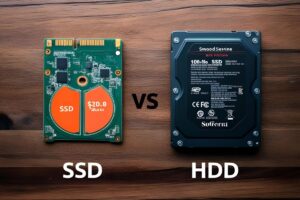
Data Recovery : Tech Best Advancement For Grow Your Business

Technology plays a crucial role in modern business operations, particularly in the field of data recovery. With businesses increasingly relying on digital solutions for storage, communication, and transactions, the ability to recover lost data quickly and efficiently has become more critical than ever. Technology is advancing at an unprecedented rate, and keeping up with the latest trends is essential for business success. Below, we explore some of the most significant technological advancements that can enhance data recovery and help grow your business.
The Evolution of Internet Speed and Its Impact on Data Recovery
The internet has become the backbone of businesses worldwide. Since the release of 1G technology in the 1980s, there has been a rapid evolution, leading to the current 4G networks. However, the introduction of 5G is set to revolutionize the industry even further. Compared to 4G, 5G offers speeds that are over ten times faster, significantly improving cloud storage, remote access, and data backup capabilities.
For businesses relying on real-time data recovery and cloud-based storage, 5G will reduce downtime and enhance accessibility. Companies will benefit from faster uploads and downloads, allowing for quicker recovery of critical information after data loss. Many telecommunications companies have already begun testing and implementing 5G technology across the globe, making it a vital trend to watch in 2024 and beyond.
Artificial Intelligence (AI) and Machine Learning in Data Recovery
Artificial Intelligence (AI) has transformed various industries, including data recovery. AI-powered tools can predict, detect, and recover lost data more efficiently than traditional methods. By mimicking human learning and decision-making processes, AI can analyze large datasets, identify patterns, and automate data recovery processes.
For instance, AI-driven software can quickly scan damaged hard drives, reconstruct lost files, and restore data with minimal human intervention. Businesses can leverage AI-powered solutions to enhance security, reduce human errors, and speed up data retrieval. Additionally, AI chatbots and virtual assistants can manage daily schedules, provide real-time updates on system health, and offer insights into potential data vulnerabilities.
Blockchain Technology for Enhanced Data Security and Recovery
Blockchain technology has gained significant attention due to its association with cryptocurrencies like Bitcoin. However, its potential extends far beyond digital currencies. Blockchain provides a decentralized, tamper-proof ledger that enhances security, transparency, and data integrity.
For businesses, implementing blockchain in data recovery can ensure that records remain unaltered and protected from cyber threats. Since blockchain records are immutable and stored across multiple nodes, businesses can prevent unauthorized data modification, making it an excellent solution for securing sensitive business information. This technology is expected to play a crucial role in data storage, security, and retrieval in the coming years.
Cloud Computing and Data Recovery
Cloud technology has revolutionized how businesses store and access data. With cloud-based solutions, businesses can recover lost data quickly without the risk of permanent loss. Cloud computing enables remote backups, automated synchronization, and scalable storage solutions.
Companies investing in cloud-based data recovery services can benefit from minimal downtime, cost-effective solutions, and enhanced security. Leading cloud service providers such as Amazon Web Services (AWS), Google Cloud, and Microsoft Azure offer advanced disaster recovery plans that protect businesses from data loss due to cyber-attacks, system failures, or natural disasters.

3D Printing and Digital Centralization
Another emerging trend that businesses should watch is 3D printing and digital centralization. While 3D printing is primarily used in manufacturing and healthcare, it also plays a role in data recovery by enabling rapid prototyping and component replication. For example, businesses can recreate damaged hardware components using 3D printing, reducing downtime and repair costs.
Digital centralization, on the other hand, integrates multiple business operations into a single, unified platform. This reduces data fragmentation and simplifies data recovery processes, ensuring that businesses can retrieve lost or misplaced files more efficiently.
Wireless Charging and Data Accessibility
Wireless technology is evolving beyond mobile devices and is now integrated into various business applications. Wireless charging stations are becoming more common in office spaces, allowing businesses to power devices seamlessly without cluttered cables. This advancement enhances workplace efficiency and ensures that data-driven devices remain operational at all times.
Furthermore, advancements in wireless data transfer and cloud synchronization allow businesses to back up and recover files seamlessly across multiple devices. This is particularly useful for businesses with remote teams, as employees can access and retrieve data from anywhere in the world without physical storage limitations.
Conclusion
The rapid evolution of technology presents numerous opportunities for businesses to enhance their data recovery strategies. From the implementation of 5G networks to AI-driven automation, blockchain security, and cloud computing, businesses must adapt to these advancements to remain competitive.
By embracing these technological trends, businesses can improve data security, streamline recovery processes, and minimize downtime, ultimately leading to increased efficiency and profitability. As technology continues to evolve, staying informed and investing in the latest advancements will ensure that your business remains resilient in an ever-changing digital landscape.